

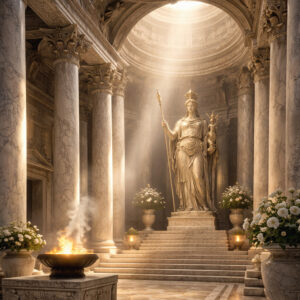
 From the earliest civilizations, sacred spaces were set apart from ordinary life through material choice. Among all natural stones, marble emerged as one of the most revered materials for temples, shrines, and ceremonial architecture. Its selection was never accidental. Marble carried spiritual meaning long before it carried ornament.
Ancient cultures believed that sacred architecture should reflect divine order, permanence, and harmony. Marble, formed over immense geological time, embodied these ideals. Its density, weight, and durability gave temples a sense of gravity and stability, reinforcing the idea that the gods—and the beliefs surrounding them—were eternal.
Light played a critical role in marble’s spiritual symbolism. Unlike darker stone, marble reflects light softly across its surface. In temples, this interaction created a luminous atmosphere that felt elevated and otherworldly. As sunlight moved across marble columns and floors, sacred spaces appeared to breathe with life, reinforcing the presence of the divine.
In classical Greece, marble temples were constructed with mathematical precision to honor the gods through balance and proportion. Structures such as the Parthenon were designed not only as places of worship, but as physical expressions of cosmic order. Marble allowed architects to achieve crisp lines, refined details, and subtle optical corrections that enhanced harmony and visual perfection.
The Romans expanded marble’s sacred role, using it to elevate both religious and civic spaces. Temples, basilicas, and ceremonial buildings relied on marble to communicate authority and reverence. The Pantheon, with its vast marble interior, exemplifies how stone, light, and space were combined to inspire awe. Marble surfaces amplified light entering from above, directing attention upward and reinforcing the connection between heaven and earth.
Beyond architecture, marble was central to sacred sculpture. Statues of gods, saints, and mythological figures were carved from marble because it could convey calm, dignity, and idealized beauty. The smoothness of polished marble suggested purity, while its strength symbolized divine power restrained by order.
Marble was also chosen for sacred spaces because it resisted decay. In a world where wood rotted and lesser stone eroded quickly, marble endured. This permanence made it the ideal material for beliefs meant to transcend generations. Temples built in marble were intended to stand long after their builders were gone, preserving rituals, myths, and cultural identity in stone.
Across cultures and centuries, marble became a bridge between the human and the divine. Its physical qualities—strength, luminosity, and endurance—mirrored spiritual ideals of transcendence and immortality. Even today, when we step into a marble-lined sanctuary or stand before ancient ruins, the stone continues to communicate reverence, stillness, and timeless belief.
Marble’s role in sacred spaces reminds us that stone is not merely material. In the hands of ancient builders, it became a vessel for faith—one that continues to speak across time.