

 For thousands of years, marble has stood at the center of human artistic expression. Long before modern materials existed, ancient civilizations recognized marble for its strength, luminous surface, and ability to hold fine detail. From early Greek sculpture to Roman architectural ornamentation, marble became synonymous with permanence, refinement, and cultural memory.
Some of the world’s most celebrated marble sculptures can still be seen today in places such as Florence, where Renaissance artists elevated stone carving to new artistic heights, and within the galleries of the Vatican Museums, where marble figures continue to inspire awe centuries after their creation. These works endure not because marble is flawless, but because it ages with dignity—its surface softening over time while its form remains intact.
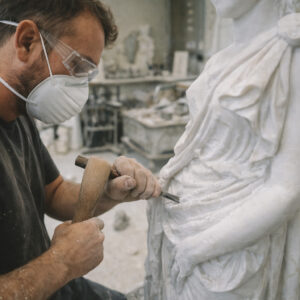
At the heart of marble sculpture is an extraordinary process: carving a finished work from a single, solid block of stone. Unlike cast or assembled art, traditional marble sculpture allows no margin for error. The sculptor removes material gradually, revealing the figure hidden within the stone. Every curve, fold, and expression is shaped through deliberate subtraction, guided by skill, experience, and vision. Once removed, stone cannot be replaced, making each finished piece a permanent record of both artistry and discipline.
For individuals, marble sculpture often carries meaning beyond decoration. It can represent remembrance, faith, strength, or a connection to history itself. Whether placed in a garden, an interior space, or a place of reflection, marble art offers a sense of grounding—an object that feels anchored in time. In a world of fleeting trends, marble sculpture remains a quiet declaration of lasting beauty and intention.